
The idea in 12 seconds
Read the transcript
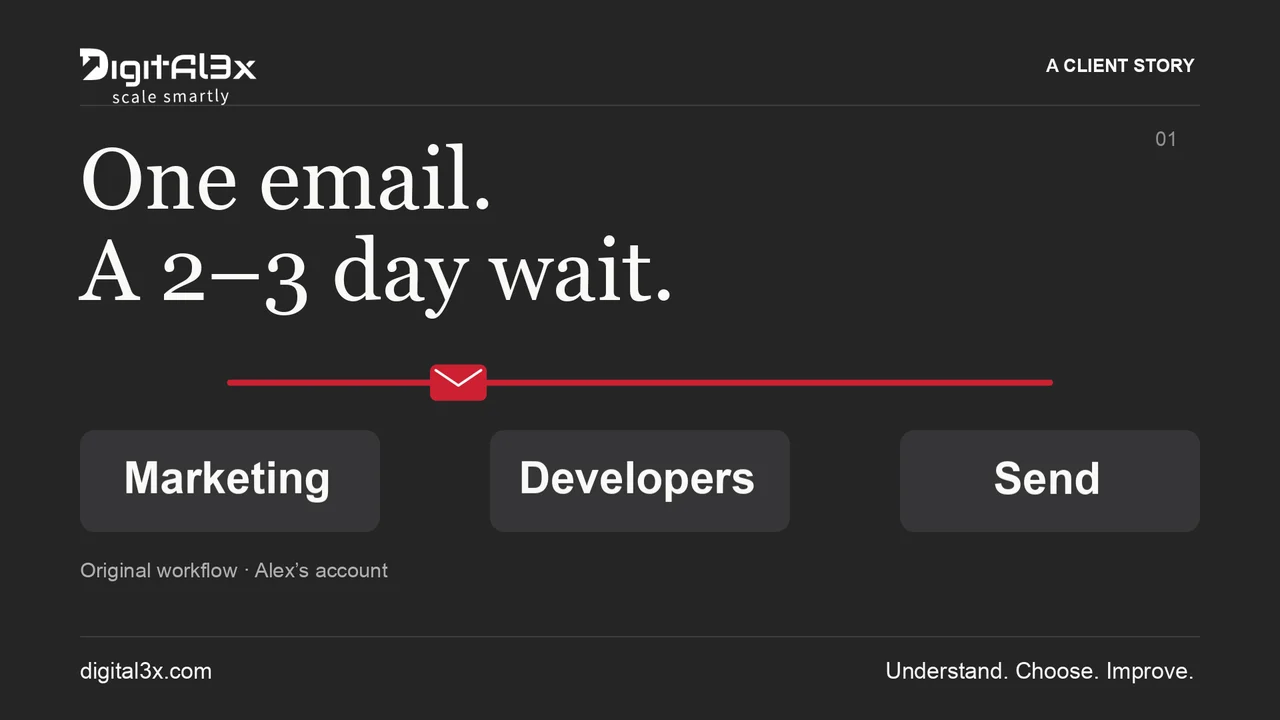
One email. A 2–3 day wait. Original workflow: marketing, developers, send. Bring both teams in. Marketing and product review the setup together. The choice has to fit: support, integration effort and cost. Criteria for this company, not a universal ranking. From sends to journeys: an event connects to onboarding and retention.
Narrated version
Marketing wrote the emails. Developers sent them, two or three days later.
That was one client's starting point. We brought marketing and product together and reviewed the setup.
We compared three platforms. Support, integration effort and cost shaped the choice.
Now, customer events can trigger onboarding and retention journeys.
Understand the work. Choose what fits. Then keep improving.
Watch with Alex’s narration
A company approached me about two years ago because they needed help choosing a marketing automation platform.
They had an internal CRM and used Mailgun to send emails. Marketing prepared the content and designs, then passed everything to developers. Getting a campaign sent could take another two or three days.
The marketing team also lacked visibility into what happened afterward. They couldn’t easily understand who opened, who interacted or what those interactions led to. Campaigns were mostly individual sends to selected segments, without journeys connected to customer behaviour.
This describes the client’s implementation. Mailgun supports email tracking; the limitation here was the visibility available to the marketing team in their existing setup.
Choosing the platform together
We began with sessions to understand their infrastructure and marketing requirements. After roughly two weeks of research, we shortlisted Braze, Solitics and Optimove, explaining the advantages and limitations of each for their situation.
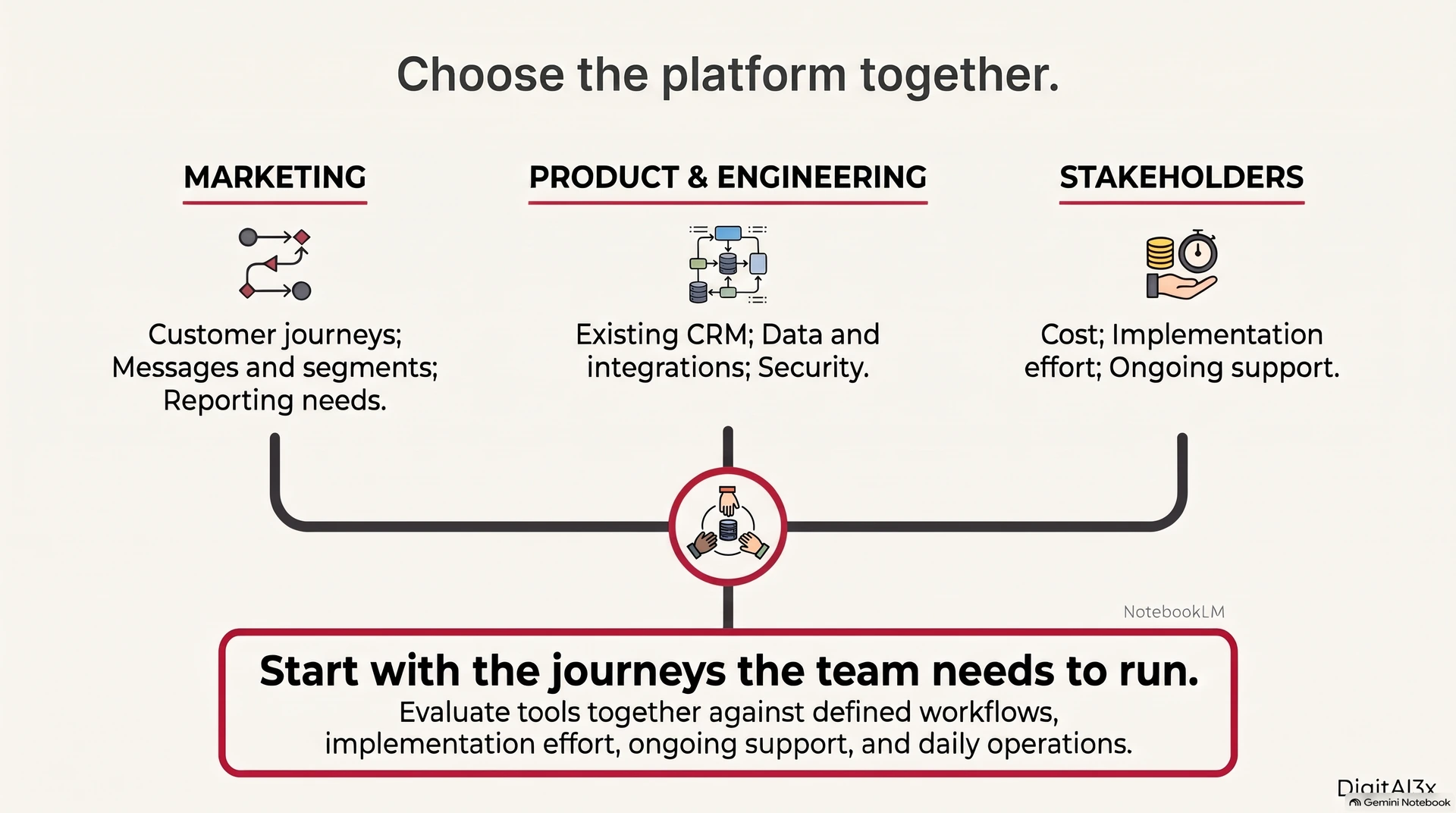
We reviewed those options with marketing, product and the company’s stakeholders together. Technical compatibility, security and everyday marketing operations all needed a place in the decision.
They chose Solitics. Three factors tipped the comparison in its favour:
- The support available.
- The complexity of integrating it into their existing infrastructure.
- The cost.
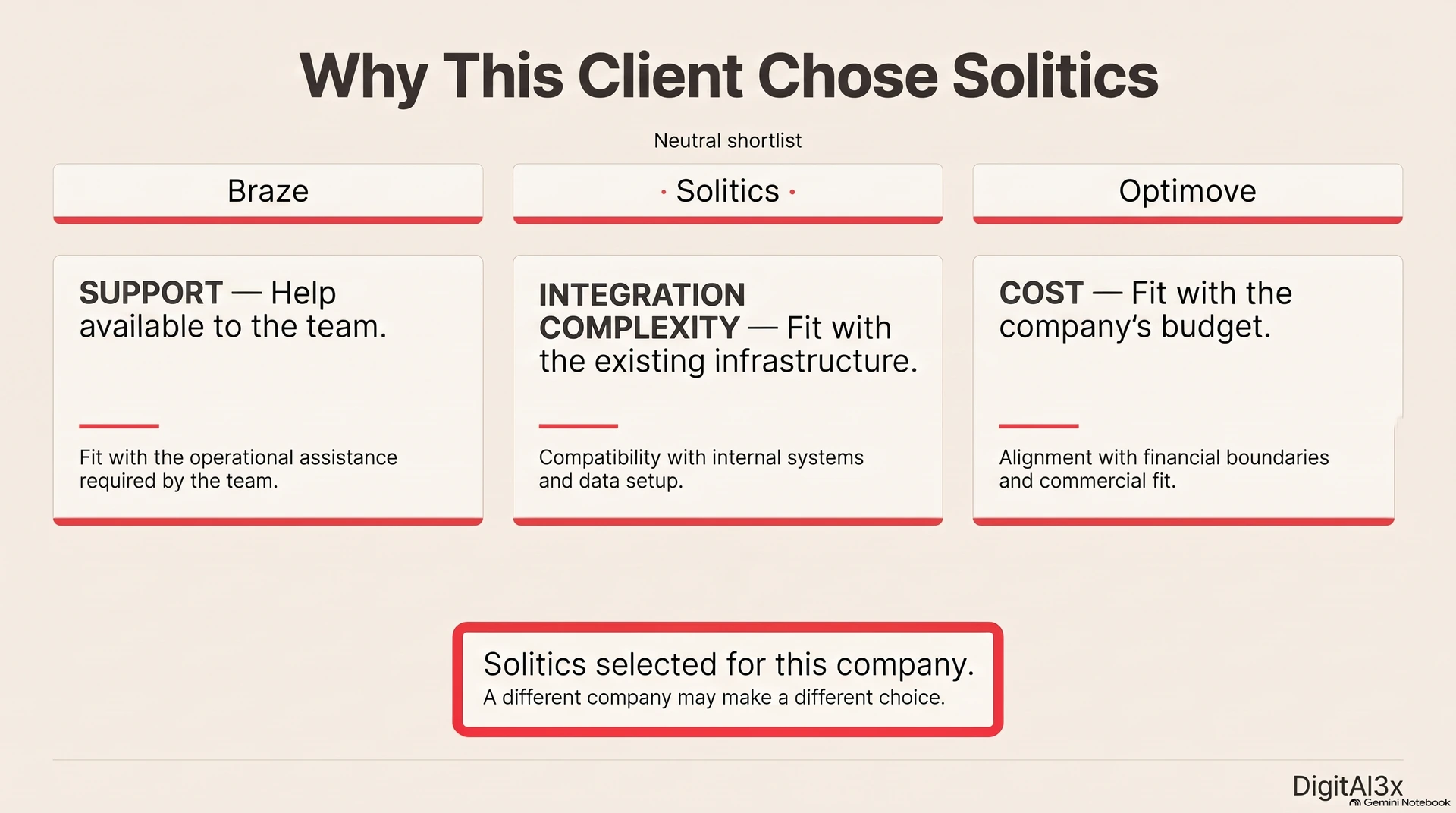
For another company, those same considerations could lead to a different choice. You have to get into the details before making a useful recommendation.
What the team runs today
Today, that company uses automated onboarding emails to guide registered users toward completing verification and reaching know-your-customer (KYC) approval. Further along the customer journey, they use segmentation and behavioural triggers for retention campaigns and promotions. Examples include push notifications linked to trading activity and pop-ups linked to login streaks.
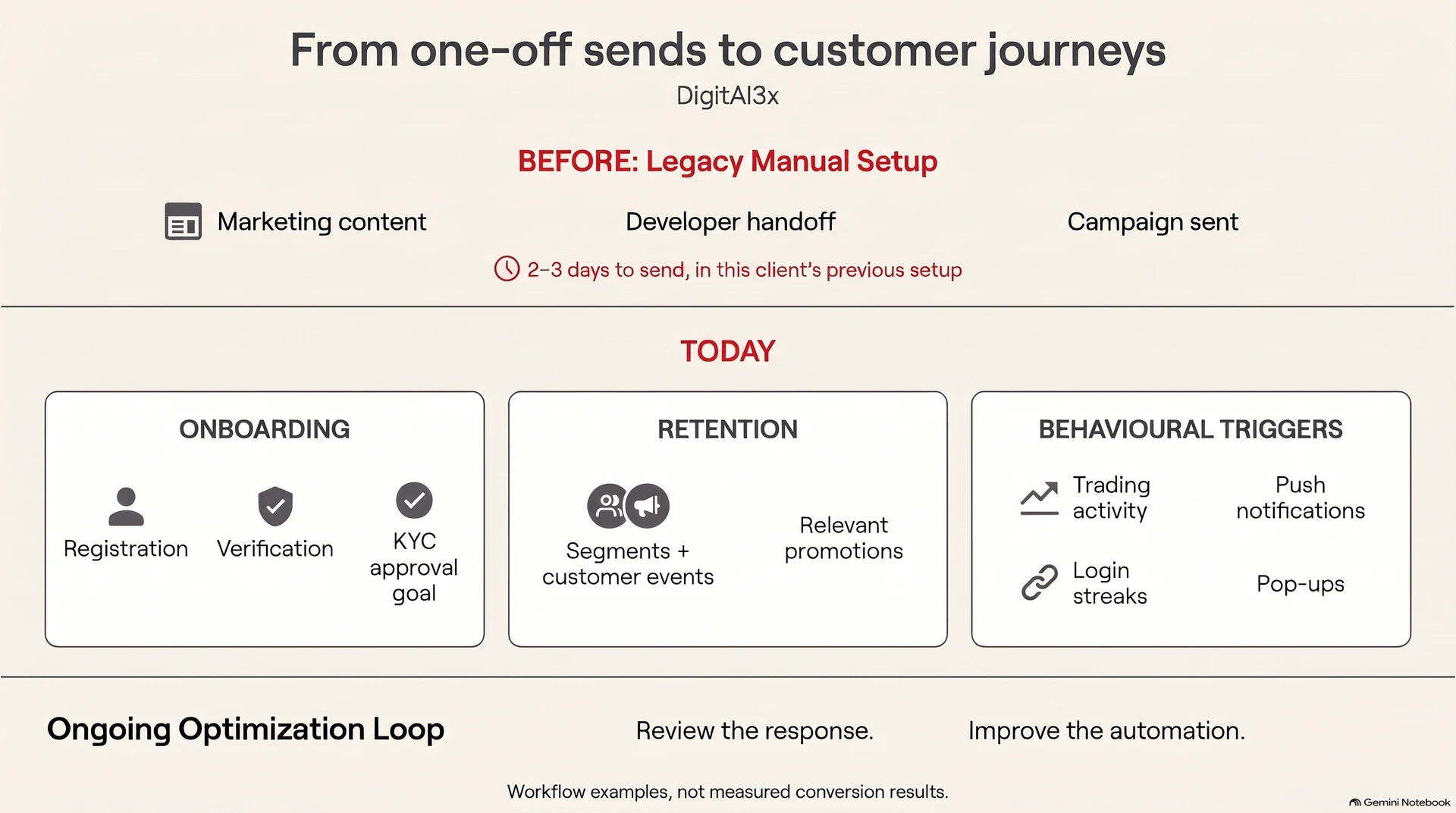
We continue supporting them with building, reviewing and optimising those automations.
Bring marketing into the decision from the beginning
These workflows show why marketing needs to participate from the beginning. The team needs to help define which customer actions matter, what should happen next and how it will assess the response. Product and engineering need to establish how the data, integrations and security will support that work.
Before comparing platforms, agree on a few customer journeys you need to run. Then evaluate the tools together against those journeys, including implementation effort, ongoing support, cost and the work marketing will handle day to day.