
The idea in 12 seconds
Read the transcript
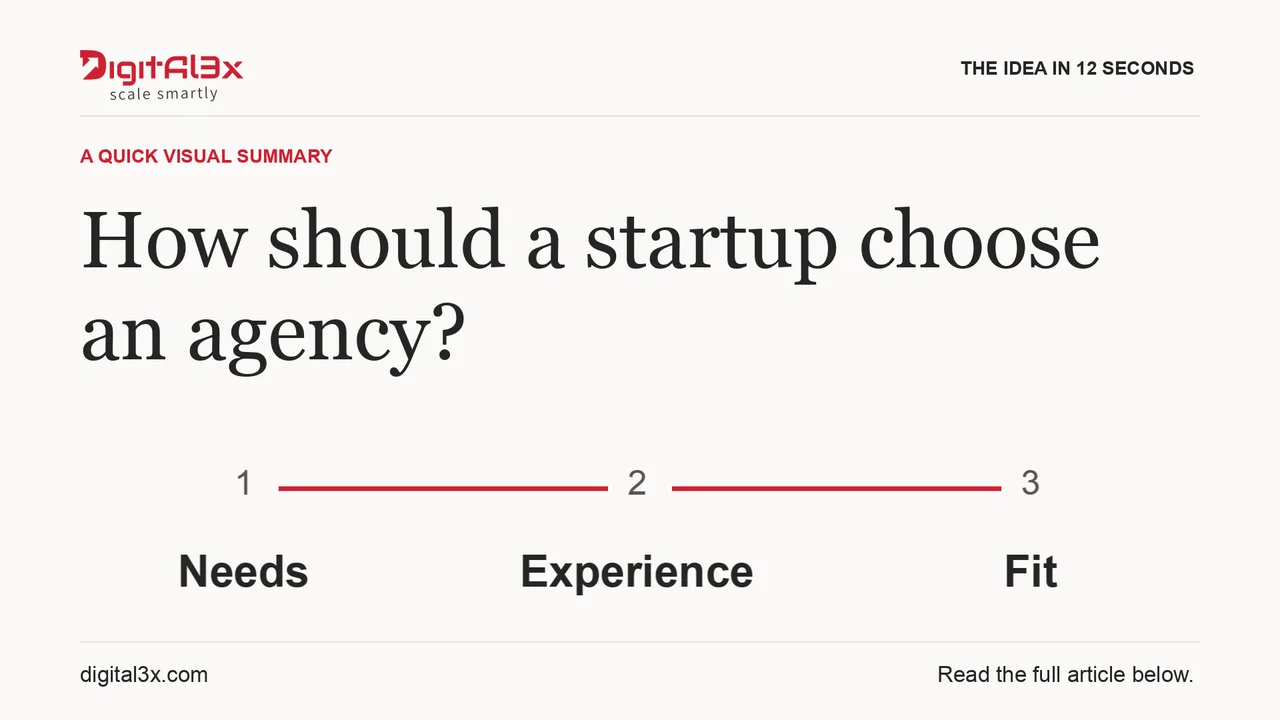
How should a startup choose an agency? Define the help you need. Compare relevant experience. Check the fit before choosing. Diagram: Needs → Experience → Fit.
Choose a startup marketing agency by the business problem it can help you solve, the work it will own and how you will judge progress together. A familiar client logo or a long list of services does not answer those questions.
This guide replaces our older agency directory with a way to compare a shortlist. It is not a current ranking of vendors. Use it whether you need a marketing partner, a specialist LinkedIn ads agency or help deciding what to do before buying more traffic.

What do you need a marketing agency to do?
Write down the constraint before arranging pitches. Do prospective customers understand the offer? Are you reaching the right people? Are enquiries unsuitable, or does the team struggle to follow up? Each problem calls for different work.
- An unclear offer: look for customer research, positioning and message development.
- A working offer with limited reach: compare relevant acquisition experience and the ability to test channels.
- Traffic without useful enquiries: investigate the landing page, conversion definitions and follow-up before increasing spend.
- A team stretched across too many priorities: consider senior planning and coordination support before adding another production supplier.
A specialist can be the right choice for a well-defined job. A broader partner may suit a team that needs help joining the work together. Ask who will actually do the work, rather than relying on the agency’s service menu.
Compare startup marketing agencies on five practical questions
1. Do they understand this customer and buying decision?
Ask the proposed team to explain your customer’s problem, alternatives and next step. Relevant experience helps, but a named client is not proof that the people pitching worked on a comparable problem. Ask what they did, what changed and what remains uncertain.
2. What will they own, and what will your team still need to do?
Separate strategy, creative, media buying, landing-page work, development, reporting and follow-up. Put an owner against each. A campaign can be ready while the page or integration it depends on is still waiting in another team’s queue.
3. Can the people using the work help choose the approach?
Alex helped an anonymous company choose marketing automation software when marketing depended on developers to send its emails. The comparison involved marketing, product and company stakeholders. Support, integration complexity and cost informed the final choice, not a feature list alone.
The same questions are useful when choosing an agency: can your team operate what is delivered, who supports it, and what will it cost to maintain? Read the marketing automation selection case.
4. How will you distinguish activity from a business result?
Agree what a qualified enquiry means, how confirmed bookings are recorded and who follows opportunities through to a decision. Ask to see an example of reporting that connects the work to those stages. Impressions and clicks explain part of the journey; they do not establish revenue.
5. What is the full commitment?
Compare the agency fee alongside media, software, creative production and internal implementation time. Clarify access to accounts and assets, approval responsibilities, contract length and how a handover would work. Request a scope with assumptions and exclusions, not just a monthly total.
Choosing a LinkedIn ads agency for a startup
If LinkedIn ads are on your shortlist, ask the agency to explain why that channel fits this audience and offer. A specific job title is not the same as a customer ready to buy.
- Which buying roles will the campaign reach, and what evidence supports that choice?
- What will the person see after the ad, and who will build and review it?
- What makes an enquiry useful enough for your sales team to follow up?
- What budget, time and outcome would make the initial test worth continuing?
- How will the team interpret a small number of enquiries without declaring a winner too early?
Ask the same questions of other channels. Avoid choosing a channel simply because it is the one a supplier sells.
A short brief to send your agency shortlist
Send each candidate the same brief so their answers are comparable:
- Customer and offer: who buys, what they buy and the problem it solves.
- Current evidence: what you know about enquiries, sales, retention and the gaps in your measurement.
- One priority: the decision or outcome the first phase must support.
- Constraints: available budget, team capacity, approvals and technical dependencies.
- Responsibilities: what you need the partner to own and what stays with your team.
- Review point: when you will assess the work and what evidence you expect to have.
Agency or independent consultancy?
You may need delivery capacity, a specialist skill or someone to challenge the plan before committing to either. These are different purchases. If the immediate question is which work matters most, start there before signing up for a full channel programme.
DigitAl3x provides AI marketing consultancy led by Alex Piliavsky, connecting marketing decisions with the people and infrastructure needed to carry them out. Use the marketing plan guide to prepare your priorities before a conversation.
Book a free 15-minute consultation or send an enquiry about the decision you need to make.